The villages are abandoned after 20 or22 years.
This cyclical habitat system, which is well-known in both the Jura region
and western Switzerland, can be explained by horticultural type farming, revealed
by the study of the grains, carried out after the burning of the plant cover
on heavy, argillaceous earth. The land is still relatively unfertile today,
despite modern methods of cultivation.
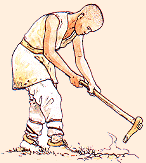
Cereal were sowed in furrows with numerous hoeing during the growth.
In the Neolithic period, the soil was quickly
depleted after being cultivated in furrows by short
mattocks made of antlers.... When the surrounding extension of the cultivated
part of the territory no longer provided yielded enough to feed the community,
it was necessary to leave and rebuild the village a few kilometers away, in
the middle of virgin land or land that had been regenerated by vegetation
after having been previously abandoned.